Context
The World Health Organization (WHO) estimates there were 40.8 million people living with HIV at the end of 2024, of which 1.4 million were aged 14 and under.[1] The vast majority live in Africa (26.3 million), but HIV continues to be a global issue, with 4.2 million people living with HIV in the Americas, 3.5 million in South-East Asia, 3.2 million in Europe, 3 million in the Western Pacific, and 610,000 in the Eastern Mediterranean.
An additional 1.3 million people acquired HIV in 2024, according to the WHO, but medical advances, and the increasingly widespread availability of antiretroviral therapies (ART), mean that many people living with HIV who have access to good healthcare now have the possibility of similar life expectancies to those of the general population.[2]
Efforts to tackle HIV and reduce related death and morbidity have been one of the great public health successes of the last thirty years, particularly in those countries with well-resourced health services. However, many of these gains are undermined by a failure to make use of all the available tools to tackle high rates of smoking among people living with HIV. In many populations of people living with HIV who are being treated with ART, those who smoke are more likely to die from smoking-related diseases than from HIV.
for HIV services, offering tobacco harm reduction using safer nicotine products can be readily implemented, and is a low-cost, high-impact intervention
HIV services need to engage clients in quitting smoking. However, a lack of training, an absence of guidelines, a lack of resources for, and the limitations of, conventional smoking cessation treatment, as well as a focus on other healthcare priorities, have resulted in lost opportunities for helping people quit smoking.
For HIV services, offering tobacco harm reduction using safer nicotine products (SNP) can be readily implemented, and is a low-cost, high-impact intervention.
How do smoking rates compare between people living with HIV and the wider population?
Across the world, smoking rates among those living with HIV have been consistently shown to be higher than those among the general population. Of the 24.5 million people living with HIV on antiretroviral treatment worldwide, it is estimated that more than 4 million are currently smoking.[3] Various research suggests smoking rates are at least two to three times higher among those living with HIV than in the general population,[4] and could be as much as four times higher.[5]
Looking at country-specific data: among people living with HIV in South Africa, 52% of men and 13% of women were found to be current smokers, compared to rates of 32% of men and 7% of women among the general population at the time.[6] This level of smoking is of particular concern given that South Africa has the highest rate of HIV in the world, with nearly one in five adults being infected and 38,000 new cases emerging each year.
research suggests smoking rates are at least two to three times higher among those living with HIV than in the general population, and could be as much as four times higher
In Yunnan, a Chinese province of more than 47 million people, it was reported that the smoking rate among those living with HIV was 62%, compared to 28% of the general population in China,[7] while a South Korean study showed that 46% of people living with HIV smoked compared to 23% among the general adult population.[8]
Looking at Europe, 52% of people living with HIV in Italy were current smokers in 2020, compared to 26% of the general population,[9] and earlier research reported that just under half of all of the those living with HIV in Germany and Austria smoked.[10]
In Australia, 21% of people living with HIV were found to be currently smoking in 2022,[11] compared to 11% of the population at large at that time.[12]
Why are smoking rates among people living with HIV so high?
The reasons for the high rates of smoking among people living with HIV are still being explored and are not yet fully understood, but they are likely due to a range of factors. These may include shared risk factors for both HIV and smoking, including social determinants such as poverty, lower educational attainment, homelessness, imprisonment and marginalisation.[13]
Within certain groups there can be overlaps between specific HIV risk behaviours, sexual practices and injecting drug use alongside smoking and drinking alcohol, the social context in which these take place, and an individual’s propensity for risk taking and pleasure seeking.
Some researchers have suggested that the continued high prevalence of ongoing smoking among people living with HIV could be due to it helping people to cope with HIV-related symptoms such as pain, as well as with anxiety, stress, and depression, all of which are high in this population.[14] Likewise a 2024 review study says smoking among those living with HIV was mainly described as a strategy for dealing with stress and depression, resulting from several stressors including financial pressure, stigma, health concerns, traumatic events, and a lack of social support.[15]
As well as self-medicating for mental health conditions, such as anxiety and depression, it has been reported that people living with HIV have inaccurate perceptions of their expectation of life and that affects their perceived susceptibility to the risks of tobacco use. A study in Mali found that while individuals living with HIV did not take up smoking as a result of the knowledge of their HIV infection, it did lead those who smoked already to increase their consumption.[16] What is abundantly clear is that smoking rates within this group remain very high and this has a significant impact in terms of ongoing morbidity and mortality.
People living with HIV also have lower quit rates than the general population.[17] Those living with HIV in the US are about 20% less likely to quit smoking than other adults in the country.[18] In South Korea, quit rates in the general population were twice as high as those for people living with HIV (45% vs 26%).[19]
it is thought that smoking cessation efforts among those living with HIV could be hindered by other challenges they face such as higher rates of recreational drug use and comorbid psychiatric illnesses such as depression
One of the reasons behind the low quit rates for people living with HIV who smoke could be that nicotine metabolism has been shown to be more rapid in those with HIV.[20][21] This might affect nicotine dependence and therefore lead to a subsequent difficulty in quitting smoking. It is also thought that smoking cessation efforts among those living with HIV could be hindered by other challenges they face such as higher rates of recreational drug use and comorbid psychiatric illnesses such as depression.[22] Being part of social networks where smoking is common creates an environmental barrier to quitting for those living with HIV who smoke.[23] The lower quit rates have also been linked to fewer attempts to quit.[24]
What are the health impacts of smoking on people living with HIV?
People living with HIV who smoke are at an increased risk of both HIV-related and non-HIV health issues.[25] Smoking almost doubles the mortality risk for those living with HIV who are taking ART.[26] There is also an association between current smoking and suboptimal adherence to ART.[27]
The national public health agency of the United States, the Centers for Disease Control and Prevention (CDC), warns that for people living with HIV, smoking cigarettes is “especially dangerous to [their] health”.[28] The CDC says people living with HIV are at higher risk of developing harmful consequences of smoking than people who do not have HIV, citing illnesses such as cancer, heart disease and stroke. The CDC also says people living with HIV who smoke are more likely to develop HIV-related infections, such as Pneumocystis pneumonia, compared to someone diagnosed with HIV who does not smoke.
Another report states that due to the effects of HIV on a person’s immune system and inflammatory processes, “smoking can lead to a higher risk of a number of illnesses, including cancer, chronic obstructive pulmonary disease, heart disease, stroke, HIV-related infections, and bacterial pneumonia”.[29]
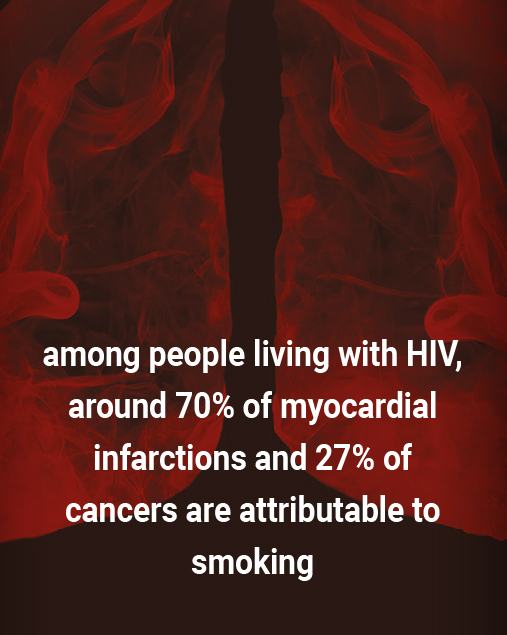
Studies have shown that the risk of developing lung cancer is between two- to four-times higher in people living with HIV than in the general population, even when adjusting for smoking intensity and duration. This increased risk persisted even after stopping tobacco use, with lung cancer incidence remaining elevated for up to five years.[30] Among people living with HIV, around 70% of myocardial infarctions[31] and 27% of cancers[32] are attributable to smoking.
A 2021 paper looking at the US found that compared to people living with HIV who are nonsmokers, smokers have “threefold the risk of cancers, double the risk of cardiovascular complications, twice the risk of developing tuberculosis, a 6–15 year shorter lifespan, and lower self-reported quality of life”.[33]
The stark conclusion from these studies is that people living with HIV who are being treated with ART are more likely to die from smoking-related diseases than from HIV-related conditions. Indeed, a study from Denmark, where HIV care is well-organised and ART is free of charge, found that “HIV-infected smokers lose more life-years to smoking than to HIV”.[34] For people living with HIV who smoked, 12.3 years of life lost were associated with smoking, while only 5.1 years of life lost were associated with HIV status alone. In the US, people living with HIV who were taking ART and smoked were between 6 and 13 times more likely to die from lung cancer than from an HIV-related condition.[35] The CDC report cited above concluded that “among people whose HIV is effectively treated, smoking cigarettes is the main contributor to preventable risk of illness and death”.[36]
How are HIV services currently addressing smoking?
Given the life-limiting impact smoking is having on this group, it is clear that HIV services need to play a role in helping their patients to stop using cigarettes. However, guidance on quitting smoking is patchy. A 2009 US study found an absence of clinical practice guidelines on smoking cessation treatment for HIV-positive people,[37] and, nearly two decades later, evidence suggests HIV services are still having limited success in delivering smoking cessation treatment. In the US, the standard packages of behavioural and pharmacological cessation therapies for people living with HIV have been found to have some short-term impact on quit rates but little long-term effect.[38]
Limitations of current efforts to reduce smoking are found in many countries. In Western Kenya, individuals living with HIV are not routinely screened for tobacco use, with researchers concluding that “providers should be trained and equipped with additional skills and resources to integrate tobacco cessation support into routine HIV care”.[39] The authors of a review on the prevalence of cigarette smoking among people living with HIV in Korea concluded there was “an urgent need for smoking cessation programs specifically designed for individuals with HIV”,[40] adding that “developing tailored smoking cessation interventions […] could help reduce smoking rates and improve quit ratios, ultimately decreasing morbidity and mortality associated with smoking in [people living with HIV]”.
Asking people living with HIV about smoking and recommending quit methods is associated with an increased interest in smoking cessation. A 2024 review reported that individuals living with HIV whose smoking was assessed by a physician were three times more likely to report a readiness to quit,[41] adding that “provider recommendations about smoking cessation also significantly increased the likelihood of interest in quitting”. In high-income countries, the review highlighted the importance of HIV care providers offering support regarding smoking cessation. The review concluded that “failure to screen for tobacco use, lack of training, and competing healthcare needs and priorities may create barriers to engaging people living with HIV in treatment”.
provider training for tobacco use treatment among people living with HIV is greatly needed in low- and middleincome countries
The situation is worse in low- and middle-income countries (LMIC), and this is also true for the general adult smoking populations. High smoking rates exacerbate health disparities which place further burdens on less robust healthcare systems.[42] Focusing on people living with HIV, the above report concludes: “Unfortunately, most providers in [LMIC] have limited access to training resources to deliver tobacco use treatment for people living with HIV. People living with HIV’s regular contact with the healthcare system presents an important opportunity to intervene. Thus, provider training for tobacco use treatment among people living with HIV is greatly needed in LMIC.”[43]
What is tobacco harm reduction – and how could it help people living with HIV who smoke?
Innovative approaches are clearly needed to help people living with HIV to quit smoking. Resource constraints, competing health priorities, a lack of staff training, and low effectiveness of conventional smoking cessation interventions mean lost opportunities to make a significant contribution to improving the health of people living with HIV.
For the millions of people across the world who currently use high-risk tobacco products, like cigarettes, including the estimated four million people living with HIV, tobacco harm reduction offers the chance to switch to a range of SNP that pose fewer risks to their health. For those people living with HIV who want to switch away from cigarettes but are either unwilling, or unable, to stop using nicotine entirely, tobacco harm reduction and SNP provide a solution.
While the burning of tobacco releases tar and gases containing thousands of toxins, many of which pose substantial risk of severe illness, SNP are non-combustible. Since none of them burn tobacco, indeed most do not even contain tobacco, it means they all deliver nicotine to the user at much lower risk than continued smoking, and, in isolation from tobacco smoke, nicotine is a relatively low-risk substance.
for the millions of people across the world who currently use high-risk tobacco products, like cigarettes, including the estimated four million people living with HIV, tobacco harm reduction offers the chance to switch to a range of SNP that pose fewer risks to their health
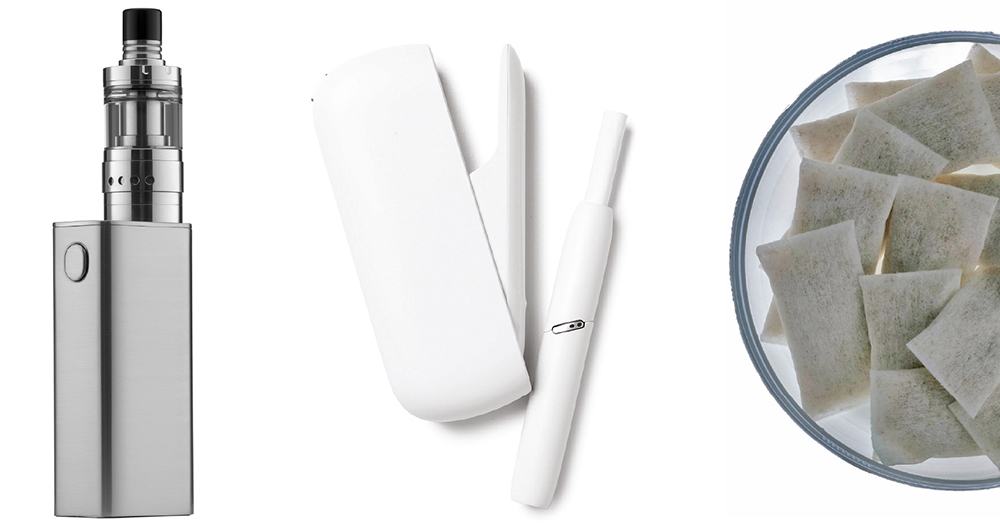
These SNP include nicotine vapes (e-cigarettes), heated tobacco products, nicotine pouches and snus, as well as nicotine replacement therapy (NRT). There is strong evidence that when people who smoke switch to SNP, there is a smaller chance of relapse back to smoking. Added to that, the ongoing Cochrane systematic review reports that nicotine vapes are more effective for smoking cessation than NRT.[44]
Conclusion
Given the devastating impact smoking has on the life expectancies of people living with HIV, it is vital that HIV treatment services do as much as possible to provide additional support to help encourage their patients to stop or reduce their smoking.
The smoking cessation programmes that have been implemented in HIV treatment services have tended to be a low priority and ineffective, frequently adopting the “quit or die” approach. However, the increasing uptake of SNP around the world shows they are now a viable new tool to divert people away from high-risk forms of tobacco, and they could therefore provide an additional route away from smoking for people living with HIV.
Tobacco harm reduction through SNP is also consistent with the broader public health harm reduction approach to HIV prevention and care. If HIV services and their donors were to raise awareness about the various SNP available to people living with HIV who smoke, this could be a high-impact intervention that is low cost and easy to implement.
Going forwards, it is therefore critically important for HIV services around the world to integrate tobacco harm reduction into the care they provide for their patients. Just as access to ART has radically improved the health and life expectancy of people living with HIV, the adoption of effective THR approaches can have a transformative impact on the health of those within this community who are unable, or unwilling, to give up smoking.
For further information about the Global State of Tobacco Harm Reduction’s work, or the points raised in this GSTHR Briefing Paper, please contact [email protected]
About us: Knowledge·Action·Change (K·A·C) promotes harm reduction as a key public health strategy grounded in human rights. The team has over forty years of experience of harm reduction work in drug use, HIV, smoking, sexual health, and prisons. K·A·C runs the Global State of Tobacco Harm Reduction (GSTHR) which maps the development of tobacco harm reduction and the use, availability and regulatory responses to safer nicotine products, as well as smoking prevalence and related mortality, in over 200 countries and regions around the world. For all publications and live data, visit https://gsthr.org
Our funding: The GSTHR project is produced with the help of a grant from Global Action to End Smoking (formerly known as Foundation for a Smoke-Free World), an independent, US non-profit 501(c)(3) grant-making organisation, accelerating science-based efforts worldwide to end the smoking epidemic. Global Action played no role in designing, implementing, data analysis, or interpretation of this Briefing Paper. The contents, selection, and presentation of facts, as well as any opinions expressed, are the sole responsibility of the authors and should not be regarded as reflecting the positions of Global Action to End Smoking.
[1] World Health Organization. (2025). HIV statistics, globally and by WHO region, 2025. World Health Organization. https://cdn.who.int/media/docs/default-source/hq-hiv-hepatitis-and-stis-library/who-ias-hiv-statistics_2025-new.pdf.
[2] Trickey, A., Zhang, L., Sabin, C. A., & Sterne, J. A. C. (2022). Life expectancy of people with HIV on long-term antiretroviral therapy in Europe and North America: A cohort study. The Lancet Healthy Longevity, 3, S2. https://doi.org/10.1016/S2666-7568(22)00063-0.
[3] Ale, B. M., Amahowe, F., Nganda, M. M., Danwang, C., Wakaba, N. N., Almuwallad, A., Ale, F. B. G., Sanoussi, A., Abdullahi, S. H., & Bigna, J. J. (2021). Global burden of active smoking among people living with HIV on antiretroviral therapy: A systematic review and meta-analysis. Infectious Diseases of Poverty, 10, 12. https://doi.org/10.1186/s40249-021-00799-3.
[4] Giles, M. L., Gartner, C., & Boyd, M. A. (2018). Smoking and HIV: What are the risks and what harm reduction strategies do we have at our disposal? AIDS Research and Therapy, 15(1), 26. https://doi.org/10.1186/s12981-018-0213-z.
[5] Mdege, N. D., Shah, S., Dogar, O., Pool, E. R., Weatherburn, P., Siddiqi, K., Zyambo, C., & Livingstone-Banks, J. (2024). Interventions for tobacco use cessation in people living with HIV. Cochrane Database of Systematic Reviews, 8. https://doi.org/10.1002/14651858.CD011120.pub3.
[6] Elf, J. L., Variava, E., Chon, S., Lebina, L., Motlhaoleng, K., Gupte, N., Niaura, R., Abrams, D., Golub, J. E., & Martinson, N. (2018). Prevalence and Correlates of Smoking Among People Living With HIV in South Africa. Nicotine & Tobacco Research, 20(9), 1124–1131. https://doi.org/10.1093/ntr/ntx145.
[7] Luo, X., Duan, S., Duan, Q., Pu, Y., Yang, Y., Ding, Y., Gao, M., & He, N. (2014). Tobacco use among HIV-infected individuals in a rural community in Yunnan Province, China. Drug and Alcohol Dependence, 134, 144–150. https://doi.org/10.1016/j.drugalcdep.2013.09.023.
[8] Park, B., Jang, Y., Kim, T., Choi, Y., Ahn, K. H., Kim, J. H., Seong, H., Choi, J. Y., Kim, H. Y., Song, J. Y., Kim, S.-W., Choi, H. J., Park, D. W., Yoon, Y. K., & Kim, S. I. (2024). Prevalence and trends of cigarette smoking among adults with HIV infection compared with the general population in Korea. Epidemiology and Health, 46, e2024097. https://doi.org/10.4178/epih.e2024097.
[9] De Socio, G. V., Pasqualini, M., Ricci, E., Maggi, P., Orofino, G., Squillace, N., Menzaghi, B., Madeddu, G., Taramasso, L., Francisci, D., Bonfanti, P., Vichi, F., dell’Omo, M., & Pieroni, L. (2020). Smoking habits in HIV-infected people compared with the general population in Italy: A cross-sectional study. BMC Public Health, 20, 734. https://doi.org/10.1186/s12889-020-08862-8.
[10] Degen, O., Arbter, P., Hartmann, P., Mayr, C., Buhk, T., Schalk, H., Brath, H., & Ernst Dorner, T. (2014). Smoking prevalence, readiness to quit and smoking cessation in HIV+ patients in Germany and Austria. Journal of the International AIDS Society, 17(4Suppl 3), 19729. https://doi.org/10.7448/IAS.17.4.19729.
[11] Norman, T., Power, J., Rule, J., Chen, J., & Bourne, A. (2022). HIV Futures 10: Quality of life among people living with HIV in Australia. https://doi.org/10.26181/21397641.
[12] Smoking and vaping, 2022. (2023, December 15). Australian Bureau of Statistics. https://www.abs.gov.au/statistics/health/health-conditions-and-risks/smoking-and-vaping/latest-release.
[13] Miles, D. R. B., Bilal, U., Hutton, H., Lau, B., Lesko, C., Fojo, A., McCaul, M. E., Keruly, J., Moore, R., & Chander, G. (2019). Tobacco Smoking, Substance Use, and Mental Health Symptoms in People with HIV in an Urban HIV Clinic. Journal of Health Care for the Poor and Underserved, 30(3), 1083–1102. https://doi.org/10.1353/hpu.2019.0075.
[14] Mdege, N. D., Shah, S., Ayo-Yusuf, O. A., Hakim, J., & Siddiqi, K. (2017). Tobacco use among people living with HIV: Analysis of data from Demographic and Health Surveys from 28 low-income and middle-income countries. The Lancet Global Health, 5(6), e578–e592. https://doi.org/10.1016/S2214-109X(17)30170-5.
[15] Hoang, T. H. L., Nguyen, V. M., Adermark, L., Alvarez, G. G., Shelley, D., & Ng, N. (2024). Factors Influencing Tobacco Smoking and Cessation Among People Living with HIV: A Systematic Review and Meta-analysis. AIDS and Behavior, 28(6), 1858–1881. https://doi.org/10.1007/s10461-024-04279-1.
[16] Mdege, Shah, Ayo-Yusuf, Hakim, & Siddiqi, 2017.
[17] CDCTobaccoFree. (2023, August 18). People Living With HIV - Tips From Former Smokers. Centers for Disease Control and Prevention. https://www.cdc.gov/tobacco/campaign/tips/groups/hiv.html.
[18] Miles, Bilal, Hutton, Lau, Lesko, Fojo, McCaul, Keruly, Moore, & Chander, 2019.
[19] Park, Jang, Kim, Choi, Ahn, Kim, Seong, Choi, Kim, Song, Kim, Choi, Park, Yoon, & Kim, 2024.
[20] Park, Jang, Kim, Choi, Ahn, Kim, Seong, Choi, Kim, Song, Kim, Choi, Park, Yoon, & Kim, 2024.
[21] Orlinick, B. L., & Farhadian, S. F. (2025). HIV, smoking, and the brain: A convergence of neurotoxicities. AIDS Research and Therapy, 22, 13. https://doi.org/10.1186/s12981-025-00714-y.
[22] Asfar, T., Perez, A., Shipman, P., Carrico, A. W., Lee, D. J., Alcaide, M. L., Jones, D. L., Brewer, J., & Koru-Sengul, T. (2021). National Estimates of Prevalence, Time-Trend, and Correlates of Smoking in US People Living with HIV (NHANES 1999–2016). Nicotine & Tobacco Research, 23(8), 1308–1317. https://doi.org/10.1093/ntr/ntaa277.
[23] Cioe, P. A., Gordon, R. E. F., Guthrie, K. M., Freiberg, M. S., & Kahler, C. W. (2018). Perceived barriers to smoking cessation and perceptions of electronic cigarettes among persons living with HIV. AIDS Care, 30(11), 1469–1475. https://doi.org/10.1080/09540121.2018.1489103.
[24] Hoang, Nguyen, Adermark, Alvarez, Shelley, & Ng, 2024.
[25] Yu, Y., Xiao, F., Xia, M., Huang, L., Liu, X., Tang, W., & Gong, X. (2024). Comparison of smoking behaviors and associated factors between HIV-infected and uninfected men in Guilin, China: A case–control study. Frontiers in Psychology, 15, 1422144. https://doi.org/10.3389/fpsyg.2024.1422144.
[26] Helleberg, M., May, M. T., Ingle, S. M., Dabis, F., Reiss, P., Fätkenheuer, G., Costagliola, D., d’Arminio, A., Cavassini, M., Smith, C., Justice, A. C., Gill, J., Sterne, J. A. C., & Obel, N. (2015). Smoking and life expectancy among HIV-infected individuals on antiretroviral therapy in Europe and North America. AIDS, 29(2), 221–229. https://doi.org/10.1097/QAD.0000000000000540.
[27] Ale, Amahowe, Nganda, Danwang, Wakaba, Almuwallad, Ale, Sanoussi, Abdullahi, & Bigna, 2021.
[28] CDCTobaccoFree, 2023. References | 9 What is the impact of smoking on people living with HIV and how could tobacco harm reduction help?
[29] Shamo, F. (2024). The Effect of a Tobacco Use Reduction Program on the Prevalence of Smoking and Tobacco Use and Quitting Behavior Among People Living With HIV/AIDS in Michigan. Preventing Chronic Disease, 21. https://doi.org/10.5888/pcd21.230115.
[30] Miles, Bilal, Hutton, Lau, Lesko, Fojo, McCaul, Keruly, Moore, & Chander, 2019.
[31] Rasmussen, L. D., Helleberg, M., May, M. T., Afzal, S., Kronborg, G., Larsen, C. S., Pedersen, C., Gerstoft, J., Nordestgaard, B. G., & Obel, N. (2015). Myocardial infarction among Danish HIV-infected individuals: Population-attributable fractions associated with smoking. Clinical Infectious Diseases: An Official Publication of the Infectious Diseases Society of America, 60(9), 1415–1423. https://doi.org/10.1093/cid/civ013.
[32] Helleberg, M., Gerstoft, J., Afzal, S., Kronborg, G., Larsen, C. S., Pedersen, C., Bojesen, S. E., Nordestgaard, B. G., & Obel, N. (2014). Risk of cancer among HIV-infected individuals compared to the background population: Impact of smoking and HIV. AIDS, 28(10), 1499–1508. https://doi.org/10.1097/QAD.0000000000000283.
[33] Asfar, Perez, Shipman, Carrico, Lee, Alcaide, Jones, Brewer, & Koru-Sengul, 2021.
[34] Helleberg, M., Afzal, S., Kronborg, G., Larsen, C. S., Pedersen, G., Pedersen, C., Gerstoft, J., Nordestgaard, B. G., & Obel, N. (2013). Mortality Attributable to Smoking Among HIV-1–Infected Individuals: A Nationwide, Population-Based Cohort Study. Clinical Infectious Diseases, 56(5), 727–734. https://doi.org/10.1093/cid/cis933.
[35] Reddy, K. P., Kong, C. Y., Hyle, E. P., Baggett, T. P., Huang, M., Parker, R. A., Paltiel, A. D., Losina, E., Weinstein, M. C., Freedberg, K. A., & Walensky, R. P. (2017). Lung Cancer Mortality Associated With Smoking and Smoking Cessation Among People Living With HIV in the United States. JAMA Internal Medicine, 177(11), 1613–1621. https://doi.org/10.1001/jamainternmed.2017.4349.
[36] CDCTobaccoFree, 2023.
[37] Review: The Need for Smoking Cessation Among HIV-Positive Smokers. (2009, June). AIDS Education and Prevention. https://guilfordjournals.com/doi/10.1521/aeap.2009.21.3_supp.14.
[38] Shuter, J., Reddy, K. P., Hyle, E. P., Stanton, C. A., & Rigotti, N. A. (2021). Harm reduction for smokers living with HIV. The Lancet HIV, 8(10), e652–e658. https://doi.org/10.1016/S2352-3018(21)00156-9.
[39] Kwena, Z. A., Bukusi, E. A., Ongeri, L., Shade, S. B., Vijayaraghavan, M., Odhiambo, F. A., Ogala, C. O., Cohen, C. R., Magati, P., Olando, Y. A., Rota, G., Chatterjee, P., Osula, C. A., Nutor, J. J., & Bialous, S. S. (2024). Understanding HIV care providers’ support for tobacco cessation among people living with HIV in Western Kenya: A formative qualitative study. BMJ Public Health, 2(1). https://doi.org/10.1136/bmjph-2023-000776.
[40] Park, Jang, Kim, Choi, Ahn, Kim, Seong, Choi, Kim, Song, Kim, Choi, Park, Yoon, & Kim, 2024.
[41] Hoang, Nguyen, Adermark, Alvarez, Shelley, & Ng, 2024.
[42] Adebisi, Y. A., Lungu, S., Curado, A., Oke, G., & Yach, D. (2025). Understanding research gaps and priorities for tobacco harm reduction in low-income and middle-income countries. Ethics, Medicine and Public Health, 33, 101117. https://doi.org/10.1016/j.jemep.2025.101117.
[43] Hoang, Nguyen, Adermark, Alvarez, Shelley, & Ng, 2024.
[44] Lindson, N., Butler, A. R., McRobbie, H., Bullen, C., Hajek, P., Wu, A. D., Begh, R., Theodoulou, A., Notley, C., Rigotti, N. A., Turner, T., Livingstone-Banks, J., Morris, T., & Hartmann-Boyce, J. (2025). Electronic cigarettes for smoking cessation. Cochrane Database of Systematic Reviews, 1. https://doi.org/10.1002/14651858.CD010216.pub9.
Images: depositphotos.com