Introduction
Over the last two decades, the prevalence of smoking among general adult populations has been declining in many countries, particularly wealthier nations. But across both high-income countries (HIC) and low- and middle-income countries (LMIC), smoking has a significant and often disproportionate impact on marginalised communities. In this Briefing Paper, we consider how smoking affects one such group, people who are facing problems with their drug use. Integrating tobacco harm reduction into drug treatment and harm reduction services, published alongside this Briefing Paper, offers some practical insights for frontline practitioners.
High risk drug use: part of a complex picture
High risk or dependent drug use can be devastating for individuals and families; it is also a major global public health issue. Estimates for 2023 from the UN Office on Drugs and Crime suggest there were 64 million people with drug use disorders worldwide, of whom an estimated 14 million administered their drugs by injection. Only one in 12 were in treatment.[1]
The crossover between high-risk drug use and other risk factors for poor health and social exclusion is significant. Data varies between countries, but average estimates drawn from multiple studies suggest that around 60% of people who fit diagnostic criteria for ‘substance use disorder’ have at least one other severe mental illness, and around half of homeless people are dependent on drugs.[2][3][4] People who inject drugs are at high risk of blood-borne viruses through use of contaminated equipment, with one global meta-analysis finding that 15% are HIV positive, 60% have viral hepatitis C (HCV) and 6% viral hepatitis B (HBV).[5][6] At an estimated global prevalence of 25%, the rate of tuberculosis (TB) infection is also elevated among people who use drugs (compared to 5–10% in the global population).[7]
estimates suggest there were 64 million people with drug use disorders worldwide, of whom an estimated 14 million administered their drugs by injection. Only one in 12 were in treatment
Dependency on drugs is also common among people who are incarcerated; drug use disorders detected at prison intake ranged between 27% to 68% in data from 13 LMICs, while European studies suggest that between 30% and 75% of people with problematic drug use have spent time in prison.[8][9]
International data consistently shows that smoking or risky tobacco use rates are disproportionately high in this community. A meta-analysis by Guydish et.al. looked at 54 studies with data on smoking prevalence in addiction treatment across 20 countries and compared it with the smoking rate in the general population. Among people enrolled in addiction treatment, smoking rates were between two and four times higher than the general population; at 85%, the average smoking rate was highest among people receiving opioid agonist maintenance therapy (OMT).[10] A recent study of adults using harm reduction services in Kyrgyzstan found almost universal nicotine use (98%), with daily use of combustible tobacco dominant (79%) followed by daily use of nasvay, a regionally-specific oral tobacco (18%).[11]
international data consistently shows that smoking or risky tobacco use rates are disproportionately high in this community
Most people who enter drug treatment are therefore experiencing an array of complex and overlapping challenges. Smoking and risky-tobacco use is among them. Yet tobacco’s impact, and efforts to support cessation, can be deprioritised in some treatment settings, despite substantial and well-documented health harms. This can be for many reasons; practitioners may smoke themselves, lack cessation training or have concerns that tackling smoking would destabilise recovery from other substances. In many cases of course, practitioners may simply be overwhelmed by the demands placed on them.
What is the impact of smoking on people who also have drug use issues?
Across all populations, smoking is a leading cause of preventable illness, causing lung cancer and numerous other cancers, cardiovascular disease, stroke and respiratory diseases, particularly COPD. It increases the risk of type II diabetes and is associated with weakened immunity. Up to half of all people who smoke will die prematurely from a tobacco-related disease.
Everyone who smokes faces these health risks. But evidence shows that people facing problems due to drug use are at substantially increased risk of dying prematurely due to smoking-related illness compared to others.
A recent analysis of mortality rate data for 106,789 people who used heroin in England found that 63% would die before the age of 70, compared to just 16% of the general population. Crucially, a similar number of the premature deaths among heroin users were caused by tobacco smoking (24%) as illegal drugs (28%).[12] And in one US study, the general population’s tobacco-related death rate was 31%, but 54% for people receiving treatment for substance use problems. Those in drug treatment were also more likely to die from a tobacco-related cause at a younger age than the rest of the population.[13]

These disparities have complex causes and interrelationships. Long-term high risk drug use can lead to significant health impacts, depending on the types of drugs used and the most frequent routes of administration. As noted above, injecting drugs significantly increases the risk of contracting blood-borne viruses. Smoking complicates the picture. HIV appears to be an independent risk factor for smoking-related cancers; one recent study found that one in four deaths of people living with HIV in the US could be attributed to cigarette smoking.[14][15] Smoking is associated with worse liver outcomes for people with HCV and HCB, and more severe progression of TB.[16][17]
People who smoke substances including crack cocaine, methamphetamine or opiates as well as tobacco often have poor respiratory health, with more regular and prolonged drug smoking associated with a chronic obstructive pulmonary disease (COPD) diagnosis.[18] It is thought that as many as half of those who smoke heroin meet the criteria for COPD (compared to one in five who inject); COPD likely increases the risk of opiate overdose due to respiratory depression, as people’s ability to breathe is already compromised.[19][20]
a recent analysis of mortality data for 106,789 people who used heroin in England found that a similar number of premature deaths were caused by tobacco smoking (24%) as illegal drugs (28%)
Why are smoking rates among people who use drugs so high?
Regardless of their use of other substances, people who smoke do so for a wide variety of reasons. It’s important to acknowledge that this may include pleasure or enjoyment. It can also be because people feel nicotine helps them cope with sadness, boredom or stress. Repeated use of nicotine can cause dependency.
As noted, rates of smoking among people who use drugs are substantially elevated compared to the general population. Specific factors that may play into this include:
Using nicotine to manage withdrawal or unpleasant side effects of substance use
Nicotine provides temporary relief from stress, anxiety and withdrawal symptoms – such as the crash following stimulant use. Research suggests, and people who use drugs report, that the use of nicotine helps with the management of withdrawal from opioid drugs.[21]
Using nicotine to increase drug effects
Evidence has shown that when nicotine is combined with other drugs, for example stimulants (cocaine, amphetamines), opioids (heroin), tetrahydrocannabinol (THC, consumed in cannabis or in other substances) and alcohol, it increases the body’s uptake of one or both substances, in a way that is likely to enhance the user’s experience.[22] This is likely to be true for novel psychoactive compounds – substances such as synthetic cannabinoids or cathinones – as well.
Using nicotine as part of a drug-taking ritual
People often smoke cigarettes before or after their drug use as part of the routine. Smoking can therefore become part of the ritual of using other drugs, reinforcing both habits.[23]
Using nicotine to self-medicate mental illness or medication side effects
As noted, smoking rates among people with mental ill health are also elevated.[24] Evidence suggests some people associate nicotine use with a reduction in specific symptoms, for post-traumatic stress disorder (PTSD) or attention deficit hyperactivity disorder (ADHD) for example. For people with schizophrenia, using nicotine can be a form of self-medication, which they feel allows them to treat cognitive symptoms or reduce the side effects of psychiatric medicines.[25]
Using nicotine in response to social and environmental settings
As noted, people who have drug problems often face a multitude of complex and overlapping challenges. They may spend time in environments and social circles where smoking is common, normalised or embedded into social currency. This could include timespent living on the street, in hostel or homeless accommodation, in prison, in mental health hospitals, or in drug treatment services themselves. Sharing cigarettes can help people form bonds at a time when they may otherwise be socially isolated or estranged from friends and family.
when combined with other drugs, evidence shows that nicotine has the capacity to increases the body’s uptake of one or both substances
How many people can access drug treatment support and smoking cessation support around the world?
Comprehensive and accessible drug treatment can be difficult to access in many countries. As previously noted, only one in 12 of the global population of people with drug use disorders were thought to be in treatment in 2023.[26] A recent review found that although 90 countries were implementing OMT and 94 countries needle and syringe exchange, only five were providing high coverage of both services, accounting for just two per cent of the global population of people who use drugs.[27]
In some high-income countries, such as Canada, Germany, the Netherlands and the United Kingdom, people with drug use problems can access primary care for drug use funded by their government. Yet even among high-income countries, this remains rare. Nevertheless, in countries of all income-levels without official government-funded drug treatment, there exist community-led, sometimes faith-based and/or charitable organisations that offer support to people in need.
‘Offer help to quit tobacco use’ is one of the six ‘MPOWER’ tobacco control measures introduced by the WHO in 2008. The goal of this measure was for countries to implement national tobacco cessation systems and make stop-smoking aids widely available to their populations.
In 2024, the WHO published its first clinical guideline for tobacco cessation in adults, effectively formalising what these services should offer. The guideline recommends a combination of “behavioural support delivered by health-care providers, digital cessation interventions and pharmacological treatments”. The pharmacological interventions recommended in the guideline are varenicline, Nicotine Replacement Therapy (NRT), bupropion and cytisine. The WHO guideline cites a total of 11 Cochrane systematic reviews of healthcare research on tobacco cessation interventions.[28] Cochrane Reviews are considered the gold-standard for evidence-based medicine.
It is therefore unfortunate that the WHO guideline does not cite the Cochrane systematic review on ‘Electronic cigarettes for smoking cessation’. This living systematic review, which has been regularly updated since 2012, has consistently found that vaping helps people to quit smoking. When updated in November 2025 it concluded: “nicotine e‐cigarettes can help people to stop smoking for at least six months. Evidence shows they work better than nicotine replacement therapy, and probably better than e‐cigarettes without nicotine.”[29][30]
Cochrane systematic reviews are considered the gold-standard for evidencebased medicine; ‘Electronic cigarettes for smoking cessation’, regularly updated since 2012, as consistently found that vaping helps people to quit smoking
While ‘Offer help to quit tobacco use’ may have been one of the core goals of global tobacco control measures since 2008, ultimately implementation remains poor. This is unsurprising. Establishing and delivering comprehensive smoking cessation services or supporting the roll out of free-to-access NRT, can be expensive. Writing new tobacco control laws into the statute book – without necessarily enforcing them – does not cost governments as much money. WHO’s own evaluation in 2021 found that smoking cessation services are “insufficient and unavailable in much of the world” and in 2025, the WHO reported that two-thirds of the world’s population does not have access to smoking cessation support.[31][32]
In many countries, professionals who work with people facing problems with drug use are unlikely to be able to refer clients to dedicated local smoking cessation services. For some practitioners, this may be where harm reduction could help.
in 2025, the WHO reported that two-thirds of the world’s population does not have access to smoking cessation support
What is tobacco harm reduction – and how could it help people who use drugs and tobacco?
The principle of tobacco harm reduction is the same as that behind the many harm reduction interventions delivered to people who use drugs around the world – everything from OMT, drug consumption rooms, overdose prevention and reversal, needle and syringe exchange, to the provision of information on safer drug use and pill checking. The focus is on keeping people alive, reducing the harm of their drug use, and where possible, offering alternatives that are safer.[33]
The most dangerous way of using nicotine is by burning a cigarette and inhaling the smoke. That’s because the cigarette is a dirty nicotine delivery system. Burning tobacco releases tar and gases containing thousands of toxins, many of which pose substantial risk of severe illness. Some oral tobacco products also release dangerous toxins when consumed.
In contrast, safer nicotine products (SNP) are non-combustible: none of them burn tobacco, with some containing no tobacco at all. Consequently, all deliver nicotine to the user at much lower risk than continued smoking. In isolation from tobacco smoke, nicotine is a relatively low-risk substance.[34] SNP include nicotine vapes (e-cigarettes), tobacco-free nicotine pouches, Swedish-style snus (an oral tobacco), some US smokeless (chewing) tobaccos and heated tobacco products. Many of these products have only been developed in the last 10–15 years.
there is strong evidence that when people who smoke switch to SNP, there is a smaller chance of relapse back to smoking
For people who use drugs and who are currently using high-risk tobacco products, like cigarettes and some oral tobaccos, tobacco harm reduction offers the chance to switch to products that pose substantially fewer risks to their health. There is strong evidence that when people who smoke switch to SNP, there is a smaller chance of relapse back to smoking. As noted, the ongoing Cochrane systematic review reports that nicotine vapes are more effective than NRT.[35]
Conclusion
Addressing smoking and risky tobacco use should be a priority for services supporting people facing problems with drug use. Smoking kills half of all those who smoke long-term, and the risk of premature death from smoking for this population is often equal to or greater than that posed by illicit drugs. Yet too often, it remains a problem hidden in plain sight.
Once people have switched away from smoking or risky tobacco use, they may continue using SNP in relative safety or gradually taper off their nicotine use before quitting entirely. Smoking is known to worsen many of the long-term health conditions that are known to affect this population – poor respiratory and cardiovascular health, and the progression of some blood-borne viruses as noted above. Switching to SNP offers the chance to dramatically reduce the harms of tobacco use and thus improve overall health in an effective and achievable way.
It is important to note that when asked, between 50–80% of people in contact with drug treatment services report they are motivated to quit smoking.[36][37] Furthermore, it is a misconception that quitting smoking during drug treatment threatens recovery from other drug issues. Providing smoking cessation support is shown to reduce smoking rates and either have a neutral or positive effect on the outcomes of treatment for other drugs.[38][39]
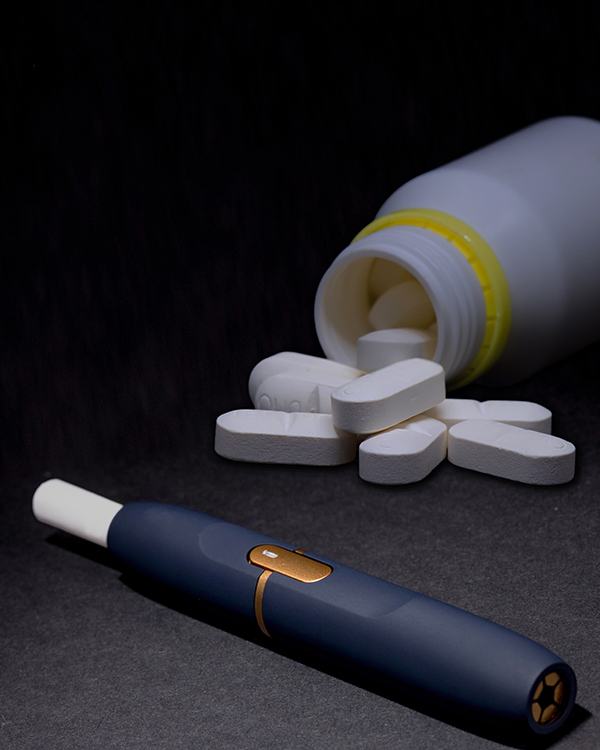
At least one kind of SNP is legally available in 129 countries, covering 71% of the global population.[40] Where they are available, professionals working with this client group should offer information and advice about, or if possible, access to SNP. Costing nothing or very little, this intervention could significantly improve both the short- and long-term health of people using drug treatment services. Maintaining a false separation between harm reduction for tobacco and harm reduction for other substances risks missing a crucial opportunity to save lives.
separating harm reduction for tobacco and harm reduction for other substances risks missing a crucial opportunity to save lives
Information about the regulatory situation for all SNP categories and NRT products can be found by searching for national-level information using the GSTHR database at https://gsthr.org/countries/ The accompanying publication, Integrating tobacco harm reduction into drug treatment and harm reduction services, offers some suggestions for approaching THR in these settings.
For further information about the Global State of Tobacco Harm Reduction’s work, or the points raised in this GSTHR Briefing Paper, please contact [email protected]
About us: Knowledge•Action•Change (K•A•C) promotes harm reduction as a key public health strategy grounded in human rights. The team has over forty years of experience of harm reduction work in drug use, HIV, smoking, sexual health, and prisons. K•A•C runs the Global State of Tobacco Harm Reduction (GSTHR) which maps the development of tobacco harm reduction and the use, availability and regulatory responses to safer nicotine products, as well as smoking prevalence and related mortality, in over 200 countries and regions around the world. For all publications and live data, visit https://gsthr.org
Our funding: The GSTHR project is produced with the help of a grant from Global Action to End Smoking (formerly known as the Foundation for a Smoke-Free World), an independent, US non-profit 501(c)(3) grant-making organisation, accelerating science-based efforts worldwide to end the smoking epidemic. Global Action played no role in designing, implementing, data analysis, or interpretation of this Briefing Paper. The contents, selection, and presentation of facts, as well as any opinions expressed, are the sole responsibility of the authors and should not be regarded as reflecting the positions of Global Action to End Smoking.
[1] UN. (2025). World Drug Report 2025—Special Points of Interest. United Nations : Office on Drugs and Crime. //www.unodc.org/unodc/en/data-and-analysis/world-drug-report-2025-special-points-of-interest.html.
[2] McNeely, J., Hamilton, L. K., Whitley, S. D., Wiegand, T. J., Stancliff, S. L., Norton, B. L., Gonzalez, C. J., & Hoffman, C. J. (2024, May). Table 3, DSM-5-TR Criteria for Diagnosing and Classifying Substance Use Disorders [a,b] [Text]. Johns Hopkins University. https://www.ncbi.nlm.nih.gov/books/NBK565474/table/table-3/.
[3] Alsuhaibani, R., Smith, D. C., Lowrie, R., Aljhani, S., & Paudyal, V. (2021). Scope, quality and inclusivity of international clinical guidelines on mental health and substance abuse in relation to dual diagnosis, social and community outcomes: A systematic review. BMC Psychiatry, 21(1), 209. https://doi.org/10.1186/s12888-021-03188-0.
[4] Neale, J., Parkin, S., Hermann, L., Metrebian, N., Roberts, E., Robson, D., & Strang, J. (2022). Substance use and homelessness: A longitudinal interview study conducted during COVID-19 with implications for policy and practice. International Journal of Drug Policy, 108, 103818. https://doi.org/10.1016/j.drugpo.2022.103818.
[5] People who inject drugs. (2020). World Health Organization. https://www.who.int/teams/global-hiv-hepatitis-and-stis-programmes/populations/people-who-inject-drugs.
[6] Rashti, R., Sharafi, H., Alavian, S. M., Moradi, Y., Mohamadi Bolbanabad, A., & Moradi, G. (2020). Systematic Review and Meta-Analysis of Global Prevalence of HBsAg and HIV and HCV Antibodies among People Who Inject Drugs and Female Sex Workers. Pathogens, 9(6), 432. https://doi.org/10.3390/pathogens9060432.
[7] Ngowi, W. S., Mandizadza, O. O., Wang, M., Shao, W. T., & Ji, C. (2025). Prevalence of tuberculosis among People Who Use Drugs 2000–2024: A systematic review and meta-analysis. Frontiers in Public Health, 13. https://doi.org/10.3389/fpubh.2025.1635053, pp. 2000–2024.
[8] Baranyi, G., Scholl, C., Fazel, S., Patel, V., Priebe, S., & Mundt, A. P. (2019). Severe mental illness and substance use disorders in prisoners in low-income and middle-income countries: A systematic review and meta-analysis of prevalence studies. The Lancet Global Health, 7(4), e461–e471. https://doi.org/10.1016/S2214-109X(18)30539-4.
[9] Ravndal, E., & Amundsen, E. J. (2010). Mortality among drug users after discharge from inpatient treatment: An 8-year prospective study. Drug and Alcohol Dependence, 108(1–2), 65–69. https://doi.org/10.1016/j.drugalcdep.2009.11.008.
[10] Guydish, J., Passalacqua, E., Pagano, A., Martínez, C., Le, T., Chun, J., Tajima, B., Docto, L., Garina, D., & Delucchi, K. (2016). An international systematic review of smoking prevalence in addiction treatment. Addiction, 111(2), 220–230. https://doi.org/10.1111/add.13099.
[11] Jerzyński, T., Mzhavanadze, G., Pikirenia, T., Stimson, G.V., Bessonov, S. (2026). High Smoking Rates and Emerging Alternatives: Nicotine Use Among People Who Use Drugs in the Kyrgyz Republic. Forthcoming, 2026.
[12] Lewer, D., Tattan‐Birch, H., & Cox, S. (2025). Among people who use heroin, tobacco smoking and illegal drugs cause a similar number of premature deaths. Addiction, 120(12), 2573–2579. https://doi.org/10.1111/add.70140.
[13] Bandiera, F. C., Anteneh, B., Le, T., Delucchi, K., & Guydish, J. (2015). Tobacco-related mortality among persons with mental health and substance abuse problems. PloS One, 10(3), e0120581. https://doi.org/10.1371/journal.pone.0120581.
[14] Hessol, N. A., Barrett, B. W., Margolick, J. B., Plankey, M., Hussain, S. K., Seaberg, E. C., & Massad, L. S. (2021). Risk of smoking-related cancers among women and men living with and without HIV. AIDS, 35(1), 101–114. https://doi.org/10.1097/QAD.0000000000002717.
[15] Asfar, T., Perez, A., Shipman, P., Carrico, A. W., Lee, D. J., Alcaide, M. L., Jones, D. L., Brewer, J., & Koru-Sengul, T. (2021). National Estimates of Prevalence, Time-Trend, and Correlates of Smoking in US People Living with HIV (NHANES 1999–2016). Nicotine & Tobacco Research, 23(8), 1308–1317. https://doi.org/10.1093/ntr/ntaa277.
[16] Rutledge, S. M., & Asgharpour, A. (2020). Smoking and Liver Disease. Gastroenterology & Hepatology, 16(12), 617– 625.
[17] Duarte, R., Lönnroth, K., Carvalho, C., Lima, F., Carvalho, A. C. C., Muñoz-Torrico, M., & Centis, R. (2018). Tuberculosis, social determinants and co-morbidities (including HIV). Pulmonology, 24(2), 115–119. https://doi.org/10.1016/j.rppnen.2017.11.003.
[18] Burhan, H., Young, R., Byrne, T., Peat, R., Furlong, J., Renwick, S., Elkin, T., Oelbaum, S., & Walker, P. P. (2019). Screening Heroin Smokers Attending Community Drug Services for COPD. Chest, 155(2), 279–287. https://doi.org/10.1016/j.chest.2018.08.1049.
[19] Hulin, J., Brodie, A., Stevens, J., & Mitchell, C. (2020). Prevalence of respiratory conditions among people who use illicit opioids: A systematic review. Addiction, 115(5), 832–849. https://doi.org/10.1111/add.14870.
[20] Darke, S., Farrell, M., Duflou, J., & Lappin, J. (2024). Chronic obstructive pulmonary disease in heroin users: An underappreciated issue with clinical ramifications. Addiction, 119(7), 1153–1155. https://doi.org/10.1111/add.16407.
[21] Custodio, L., Malone, S., Bardo, M. T., & Turner, J. R. (2022). Nicotine and opioid co-dependence: Findings from bench research to clinical trials. Neuroscience & Biobehavioral Reviews, 134, 104507. https://doi.org/10.1016/j.neubiorev.2021.12.030.
[22] Kohut, S. J. (2017). Interactions between nicotine and drugs of abuse: A review of preclinical findings. The American Journal of Drug and Alcohol Abuse, 43(2), 155–170. https://doi.org/10.1080/00952990.2016.1209513.
[23] Rupprecht, L. E., Smith, T. T., Schassburger, R. L., Buffalari, D. M., Sved, A. F., & Donny, E. C. (2015). Behavioral Mechanisms Underlying Nicotine Reinforcement. In D. J. K. Balfour & M. R. Munafò (Eds), The Neuropharmacology of Nicotine Dependence (Vol. 24, pp. 19–53). Springer International Publishing. https://doi.org/10.1007/978-3-319-13482-6_2.
[24] Alsuhaibani, Smith, Lowrie, Aljhani, & Paudyal, 2021.
[25] Winterer, G. (2010). Why do patients with schizophrenia smoke? Current Opinion in Psychiatry, 23(2), 112–119. https://doi.org/10.1097/YCO.0b013e3283366643.
[26] UN, 2025.
[27] Colledge-Frisby, S., Ottaviano, S., Webb, P., Grebely, J., Wheeler, A., Cunningham, E. B., Hajarizadeh, B., Leung, J., Peacock, A., Vickerman, P., Farrell, M., Dore, G. J., Hickman, M., & Degenhardt, L. (2023). Global coverage of interventions to prevent and manage drug-related harms among people who inject drugs: A systematic review. The Lancet Global Health, 11(5), e673–e683. https://doi.org/10.1016/S2214-109X(23)00058-X.
[28] WHO clinical treatment guideline for tobacco cessation in adults. (2024, July 2). World Health Organization. https://www.who.int/publications/i/item/9789240096431.
[29] Lindson, N., Livingstone-Banks, J., Butler, A. R., McRobbie, H., Bullen, C. R., Hajek, P., Wu, A. D., Begh, R., Theodoulou, A., Notley, C., Rigotti, N. A., Turner, T., Fanshawe, T., & Hartmann-Boyce, J. (2025). Electronic cigarettes for smoking cessation. Cochrane Database of Systematic Reviews, 2025(11). https://doi.org/10.1002/14651858.CD010216.pub10.
[30] Lindson, Livingstone-Banks, Butler, McRobbie, Bullen, Hajek, Wu, Begh, Theodoulou, Notley, Rigotti, Turner, Fanshawe, & Hartmann-Boyce, 2025.
[31] WHO. (2021). WHO global report on trends in prevalence of tobacco use 2000–2025, fourth edition (4th ed). World Health Organization. https://apps.who.int/iris/handle/10665/348537.
[32] World Health Organization. (2025). WHO report on the global tobacco epidemic, 2025: Warning about the dangers of tobacco (No. 978-92-4-011206–3). World Health Organization. https://www.who.int/publications/i/item/9789240112063.
[33] GSTHR. (2022). What is Tobacco Harm Reduction? (GSTHR Briefing Papers). Global State of Tobacco Harm Reduction. https://gsthr.org/briefing-papers/what-is-tobacco-harm-reduction/.
[34] GSTHR, 2022.
[35] Lindson, Livingstone-Banks, Butler, McRobbie, Bullen, Hajek, Wu, Begh, Theodoulou, Notley, Rigotti, Turner, Fanshawe, & Hartmann-Boyce, 2025.
[36] Syan, S. K., Belisario, K. L., Rahman, L., Levitt, E. E., McCarron, C., Radman, H., Amlung, M., Praecht, A., George, T. P., & MacKillop, J. (2025). Smoking in Substance Use Disorder Patients: Prevalence, Comorbidities, Impulsivity, and Patterns of Readiness to Change. Nicotine & Tobacco Research, 27(10), 1813–1822. https://doi.org/10.1093/ntr/ntaf089.
[37] Cookson, C., Strang, J., Ratschen, E., Sutherland, G., Finch, E., & McNeill, A. (2014). Smoking and its treatment in addiction services: Clients’ and staff behaviour and attitudes. BMC Health Services Research, 14, 304. https://doi.org/10.1186/1472-6963-14-304.
[38] Apollonio, D., Philipps, R., & Bero, L. (2012). Interventions for tobacco use cessation in people in treatment for or recovery from substance abuse. In The Cochrane Collaboration (Ed.), Cochrane Database of Systematic Reviews (p. CD010274). John Wiley & Sons, Ltd. https://doi.org/10.1002/14651858.CD010274.
[39] Apollonio, Philipps, & Bero, 2012.
[40] Shapiro, H., Jerzyński, T., Mzhavanadze, G., & Porritt, O. (2024). The Global State of Tobacco Harm Reduction 2024: A Situation Report (No. 4; GSTHR Major Reports). Global State of Tobacco Harm Reduction (GSTHR). https://gsthr.org/resources/thr-reports/the-global-state-of-tobacco-harm-reduction-2024-a-situation-report/. S. 1.
Images: depositphotos.com