Data sourced:
2025.
Page updated:
2026-11-16
Smoking is legally allowed in Nigeria and the sale of cigarettes is also permitted. However, purchasing cigarettes from vending machines or online is banned. The legal minimum age for purchasing cigarettes is 18 years. Health warnings on cigarette packaging are required, and a comprehensive ban on all tobacco advertising is enforced. They can be legally imported for trade with a license. Smoking is also subject to legal restrictions in public places, specifically healthcare, educational, and government facilities. A general taxation rate of 44% with a specific excise rate of 15.56% applies to cigarette products.
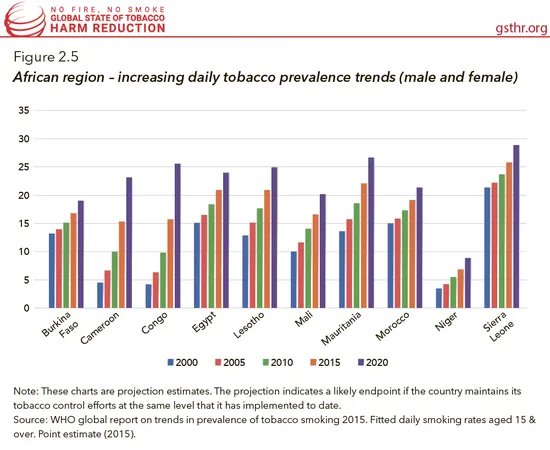
The current prevalence of tobacco smoking among adults aged 15 years and older in Nigeria was estimated to be 2.9% in 2024. In comparison, this prevalence was reported to be 2.6% in 2020. The current smoking prevalence in 2024 was 5.4% among males and 0.3% among females. The number of smokers in 2024 was approximately 3,8 million, marking a notable increase from 2,906,910 in 2020. For reference, daily smoking prevalence among adults in 2017 was 4.6%, with a prevalence of 8.6% among males and 0.5% among females.
Smoking-related mortality was significant in Nigeria, with 15,926 deaths recorded in 2021, accounting for 0.87% of all deaths in the country. Specifically, tobacco smoking led to 11,794 male deaths and 4,132 female deaths, representing 1.2% and 0.49% of all male and female deaths, respectively. These statistics underline the public health challenges posed by tobacco smoking in Nigeria, necessitating continued monitoring and regulatory efforts to mitigate its impact.